
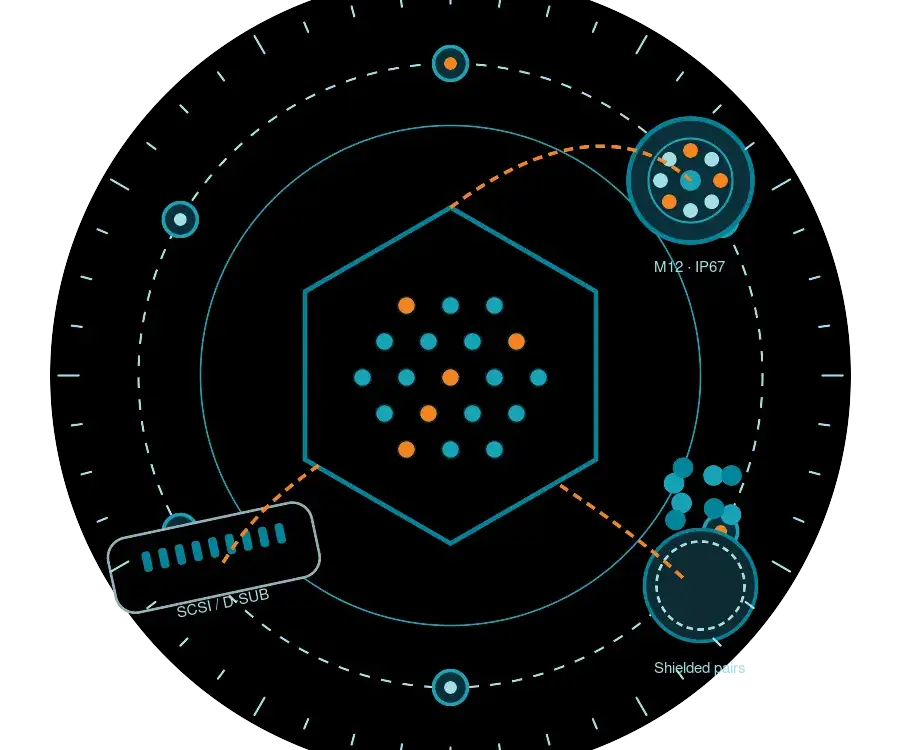
The servo encoder cable on this axis had been replaced four times before the real cause was identified.
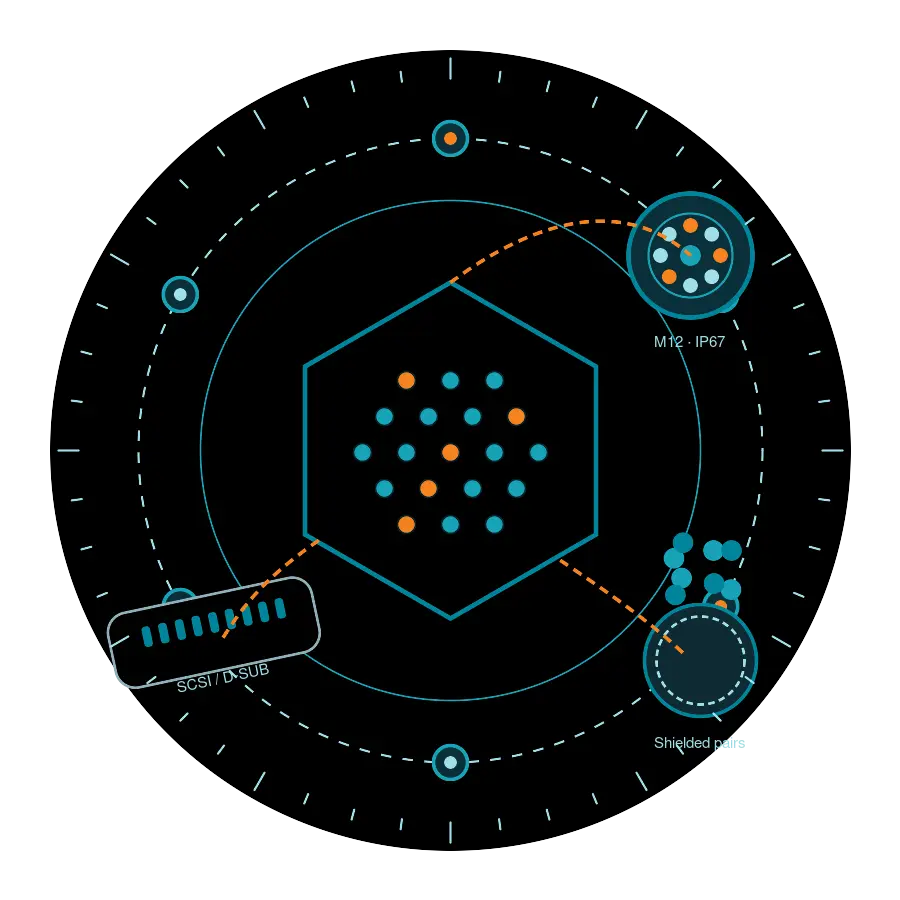
What the servo encoder cable was doing wrong
The problem
A confectionery packer running three shifts had been logging intermittent encoder alarms on its main film-feed axis for over a year. Maintenance had replaced the servo drive twice and the motor once, and the alarms continued. The pattern was telling: faults appeared at particular positions of the axis and became more frequent over the weeks following a cable change.
What we found
We asked for the failed cable and cut it open at the point of minimum bend radius. The conductors showed classic fatigue fractures with a granular surface rather than a clean break, and the shield was cracked along the same section. Two separate problems had combined: the cable was a general-purpose shielded lead rather than a drag-chain construction, and it had been installed at roughly half the bend radius its construction could tolerate.
The replacement the customer had sourced was also wired with the members of one differential pair separated — A+ and A− were in different bundles. That produced enough skew at higher axis speeds to trip the drive's position-error window.
What we supplied
A drag-chain rated encoder cable with finely stranded conductors, fillers that hold the internal geometry through repeated bending, and individually shielded pairs. Pair assignment was matched to the original Siemens specification so no drive parameters needed changing. We also specified the minimum bend radius explicitly and supplied a short length of cable carrier conduit to hold the loop at that radius.
The outcome
No encoder alarms since installation. The axis has now run past the interval at which the previous cables were failing, and the maintenance team has moved the cable from a reactive replacement item to a scheduled one. The customer has since standardised on the same construction for four other axes on the line.
Products used in this project
Send us the application detail and we will confirm which of our connectors or cable assemblies suits the duty, or propose a custom construction. You can also review our quality control process and the documentation supplied with each order.
What this means for your project
The lesson generalises. When an encoder fault appears at particular positions of an axis rather than at random, the cable is the first thing to section — not the last. A drag-chain construction and a documented bend radius would have removed a year of unplanned downtime.
Reference material for the standards referenced above is published by ISO and the RoHS compliance guide. Where a project requires conformance to a particular standard, tell us at the enquiry stage and we will confirm what documentation we can supply.